Are Amanita muscaria gummies safe?
Amanita muscaria gummies are sold in smoke shops and online as "legal mushrooms," but they contain a different mushroom with different chemistry and different risks. The FDA says Amanita isn't authorized in food, and products containing it have been tied to serious illness. Here's what you should know before buying.
On this page
- Is it psilocybin?
- No. Amanita muscaria contains ibotenic acid and muscimol
- How it acts
- Muscimol acts on GABA-A receptors (like a sedative); ibotenic acid acts on glutamate receptors. Neither targets the serotonin receptors psilocybin does
- FDA position
- Not authorized as a food ingredient and not generally recognized as safe (December 2024)
- Legal status
- Not federally scheduled; banned in Louisiana
- Known harms
- Seizures, confusion, agitation, and in rare cases coma or death
Amanita muscaria is not a magic mushroom
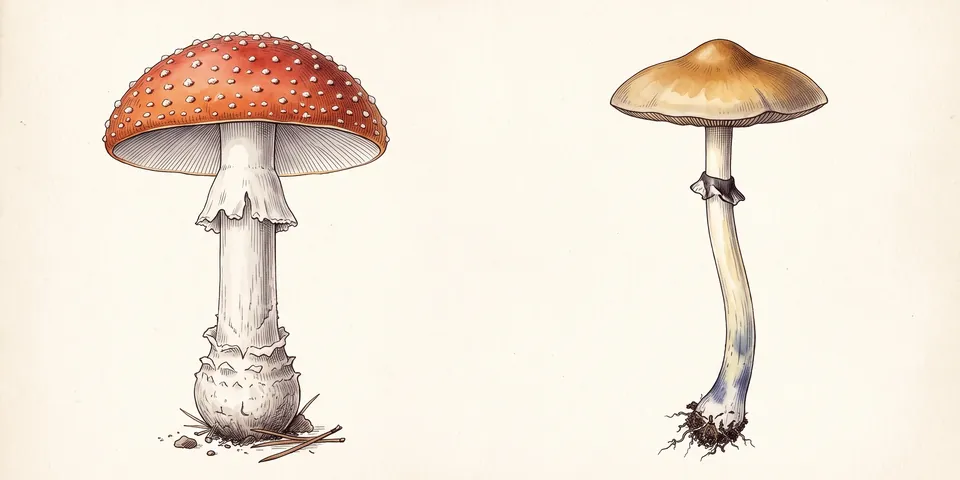
Amanita muscaria, the red-and-white fly agaric of fairy-tale illustrations, is a completely different species from psilocybin mushrooms. Its main active compounds are ibotenic acid and muscimol. Muscimol works on the brain's GABA-A receptors, the same system targeted by sedatives, and ibotenic acid acts on glutamate receptors and converts to muscimol in the body. Psilocybin works mainly on serotonin 5-HT2A receptors. That's why the effects, risks and dosing problems are different.
Researchers describe Amanita's effects as dizziness, dysphoria, hallucinations, agitation and loss of coordination, and in serious cases seizures and coma. Deaths are rare but have been reported.
What regulators have said
- FDA (December 2024): Amanita muscaria, its extracts and its compounds (ibotenic acid, muscimol and muscarine) are not authorized for use in conventional foods and are not generally recognized as safe. The agency recommends against eating foods that contain them.
- CDC (2024): the Diamond Shruumz outbreak, linked to products containing muscimol along with other compounds, involved 180 illnesses and 73 hospitalizations in 34 states. A separate CDC report tested five mushroom gummy brands bought at Virginia gas stations and smoke shops; three contained psilocybin or psilocin, including two brands labeled as Amanita products.
- States: Louisiana lists Amanita muscaria as a prohibited hallucinogenic substance. Florida regulators ordered a Tampa store selling Amanita products to stop sales. In most other states, including Nevada, Amanita isn't a controlled substance.
Why these products are popular
Because Amanita isn't federally scheduled, sellers market it as a legal alternative to psilocybin. Interest has grown fast: researchers found Google searches related to Amanita muscaria rose 114% from 2022 to 2023. But "legal to sell" doesn't mean "safe" or "regulated." There are no federal standards for how much muscimol a gummy contains, and products have contained undisclosed ingredients. See our guide to fake and mislabeled mushroom products.
How Amanita compares with psilocybin
| Amanita muscaria | Psilocybin mushrooms | |
|---|---|---|
| Active compounds | Ibotenic acid, muscimol | Psilocybin, psilocin |
| Main brain target | GABA-A (muscimol) and glutamate (ibotenic acid) receptors | Serotonin 5-HT2A receptors |
| Federal status | Not scheduled; FDA says not allowed in food | Schedule I |
| Serious risks | Seizures, delirium, coma | Psychological distress, risky behavior; physical toxicity low |
| Clinical research | Very little | Phase 3 trials for depression |
If you've taken an Amanita product and feel unwell
- Seizures, fainting, trouble breathing or severe confusion: call 911.
- Poison Control, 24/7, free: 1-800-222-1222. Keep the package for the label and batch number.
- Report a bad reaction to a food product to the FDA through its MedWatch or Safety Reporting Portal.
Frequently asked questions
Are Amanita muscaria gummies legal?
Amanita muscaria isn't a federally controlled substance, and it's legal to sell in most states. But the FDA says Amanita and its compounds aren't authorized in food, Louisiana prohibits it, and state regulators have taken action against some products.
Do Amanita gummies have psilocybin in them?
They shouldn't, because psilocybin is illegal. But testing has found that some products sold as Amanita also contained psilocybin or psilocin, and others contained synthetic or prescription drugs. Labels on these products are not reliable.
Can Amanita muscaria kill you?
Deaths are rare but have been reported, and serious poisonings can cause seizures and coma. The 2024 Diamond Shruumz outbreak, linked to products containing muscimol and other compounds, led to 73 hospitalizations. Fly agaric is also a close relative of deadly Amanita species, which is one reason foraging is dangerous.
Is Amanita the same as magic mushrooms?
No. Magic mushrooms contain psilocybin, which acts on serotonin receptors. Amanita muscaria contains muscimol and ibotenic acid, which act mainly on GABA and glutamate receptors. They produce different effects and carry different risks. See what are magic mushrooms.
Sources
- Amanita muscaria considered a toxin in food (FDA and CDC actions), FoodNavigator, January 8, 2025.
- Leas et al., research letter on Amanita muscaria products, American Journal of Preventive Medicine, 2024.
- Outbreak investigation: Diamond Shruumz products, CDC, page updated August 11, 2026.
- Florida's first "magic mushroom dispensary" halts sales, Miami New Times.
- Why Amanita muscaria is banned in Louisiana, Vice, July 2024.
- Amanita muscaria gummies: what parents should know, Partnership to End Addiction, June 2026.